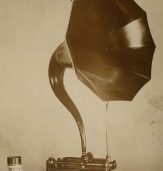
Frederick Hart was an English engineer who immigrated to New York in 1884. He established a company in Poughkeepsie in the early 1900s to build steam-powered automobiles, but soon became a manufacturer of Hollerith punched-card equipment for a nearby company that, as it turns out, would be a predecessor to International Business Machines (IBM). Hart eventually became president of a new IBM munitions division in the 1940s, located in Poughkeepsie. His original company, which by 1944 was making military gun parts, was purchased by the American Type Founders Company, and later became part of Daystrom Corporation. Hart apparently formed a new firm, which manufactured something called the Recordgraph. How and why Hart got into that business is unclear.
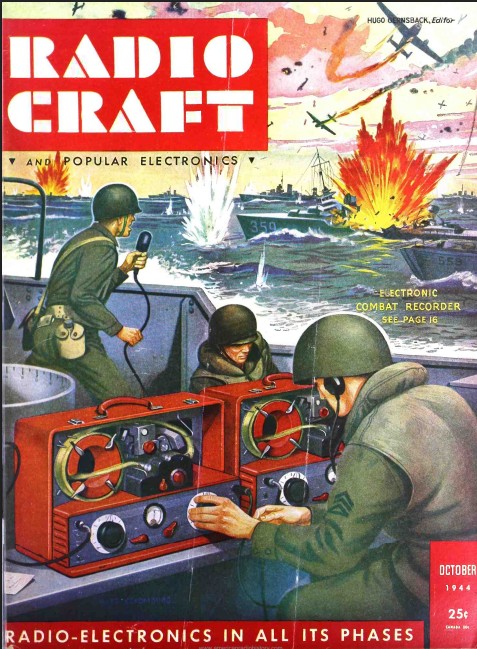
The Recordgraph was a specialized type of sound recording equipment capable of embossing a record onto a flexible plastic strip. Many such recorders had appeared before, especially in conjunction with motion pictures.
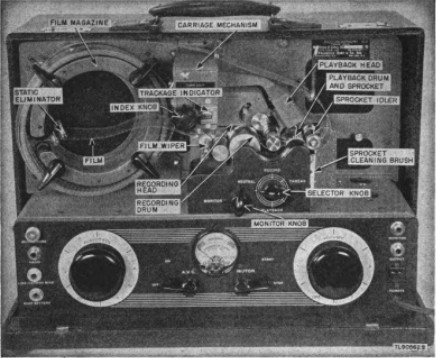
The machine utilized an endless loop of cellophane film, carried past a recording head using a mechanism clearly derived from motion picture projector design. One early product, called the Amertype Recordgraph Commando Model, employed a fifty foot, endless loop of 35 mm sprocketed film made of cellulose acetate. As the tape loop passed repeatedly under the recording head, a recording stylus embossed a sound recording into the surface.
The film passed the head at a speed of 60 feet per minute (later models also had a slow speed of 40 fpm), while the position of the stylus was gradually moved by a screw mechanism, resulting in a concentric groove on the film. A standard film provided a recording time of 1.5 hours, while a special two-sided film offered three hours of recording time. Any particular groove could be accessed by moving the head manually and reading a special track counter mechanism. The instructional literature that the company provided for the U.S. Army version (the military called the Recordgraph the “Sound Recording Set AN/UNQ-1” ) claimed an overall frequency range of 150-4,000 Hz at the high speed (60 fpm), which put it roughly on par with a good quality phonograph disk recorder of the day. The military Recordgraph was able to withstand considerable shock while recording, making it suitable for portable applications in trucks, ships, and airplanes where disk recording would have been more difficult. The machines were used, for example, by reporters during the Normandy invasion.
The Recordgraph underwent some name changes after the war. Apparently the company decided to simplify the original Amertype Recordgraph Commando Model name to simply Hart Recordgraph in mid 1944, but then seems to have changed the name of the machine to Hartron by the end of 1945.
Whatever became of the Recordgraph? Who knows. After a wave of publicity in the technical press just after the war, the product virtually disappeared. Hart made much of the fact that Recordgraphs were used to record the sound of atomic bomb tests in the Pacific in 1946, but the machines never had much success in the civilian market.
By the way. .
The Army technical manual for the machine gave detailed instructions on preventing the Recordgraph from falling into enemy hands:
- “Smash — Use sledges, axes, handaxes, pickaxes, hammers,
crowbars, heavy tools” - “Cut — Use axes, handaxes, machetes”
- “Burn — Use gasoline, kerosene, oil, flame throwers, incendiary grenades”
- “Explosives — Use firearms, grenades, TNT”
- “Disposal — Bury in slit trenches, fox holes, other
holes. Throw in streams. Scatter”
A Similar Recorder by Jay Fonda
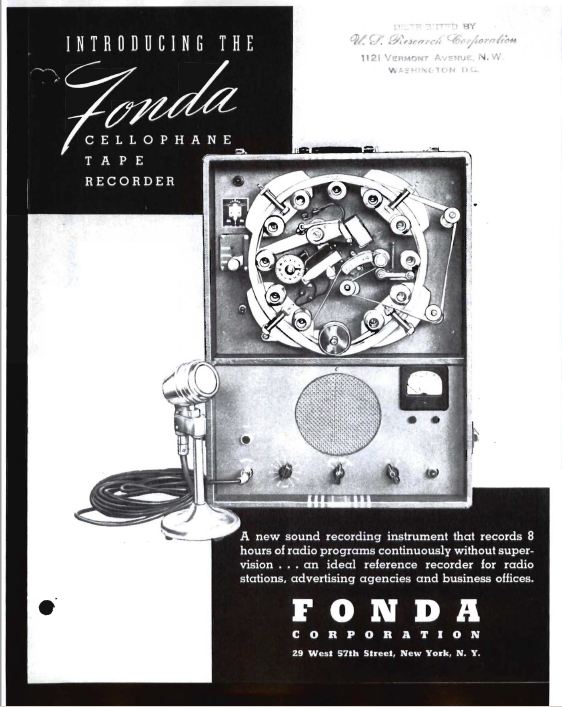
It is also not clear if there was any connection was between the Recordgraph and a similar product briefly promoted by another New Yorker named Jay Fonda–probably not. The Fonda device was also an endless-loop, plastic film, phonographic recorder, but it had a quite different mechanical design. It had an adjustable recording speed with a slow “voice recording” speed of only 40 feet per minute and a high speed of 60 fpm. Like the Recordgraph, it embossed its record onto the surface of the cellophane film. It employed a 350 foot loop of film and had a maximum recording time of eight hours. The inventor in early 1944 promoted his machine as a low-maintenance record-keeping device for monitoring purposes, to be used by airports or radio stations.
[Copyright 1998-2025 by David Morton. All rights reserved]