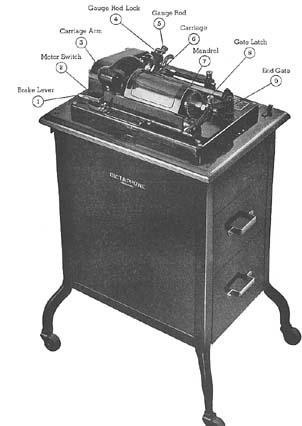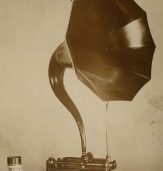
Both the Ediphone and Dictaphone products were redesigned after 1910 and the manufacturers developed numerous accessories so that the recorders could be marketed as part of a complete system. Instead of simply substituting for stenography, Edison and Columbia touted their dictation systems as something that could improve the whole flow of correspondence and document creation. An important element of this new system was the the typewriter, which was now to be used to translate the recordings into letters quickly, just as it already served to convert shorthand notes. w Every aspect of dictation machine use was carefully defined by the manufacturers to appeal to advocates of Scientific Office Management– a turn-of-the-century efficiency movement and theory of management that emphasized office “mechanization.” The features of the new system were intended to appeal to some new realities of the typical business office, especially the transition from male clerical workers to women clerical workers and larger, centralized business offices with a more rigorously enforced set of work procedures.