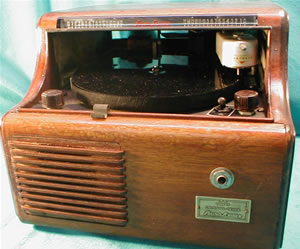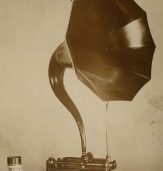
With the coming of World War II, the U.S. government became a major customer for dictation equipment. Government managers, seeking efficiency, embraced the business phonograph. It seems likely that the expansion of the market encouraged the entrance of competitors. Soundscriber, one of these new firms, and the Gray Manufacturing Company, a maker of telephone equipment, both begin manufacturing and selling dictation machines that use a different type of medium — the plastic disk. For a brief time, both Dictaphone and Edison were in the embarrassing position of holding on to a medium that suddenly looked antiquated. Both were still making dictation machines that used the same cylinder recording medium that had been introduced in the 1880s (although the old “acoustic” recording process had been replaced with electric microphones and electronic amplifiers in the 1930s). Both companies would make cylinder recorders until about 1950, and would continue to service cylinder machines for many more years. Dictaphone, however, was preparing for change. During World War II, the company began to manufacture a new type of product using a thin, wide plastic “belt” instead of a wax cylinder. This product, sold to the military for the duration of the conflict, allowed Dictaphone to attain a strong position in the postwar market.